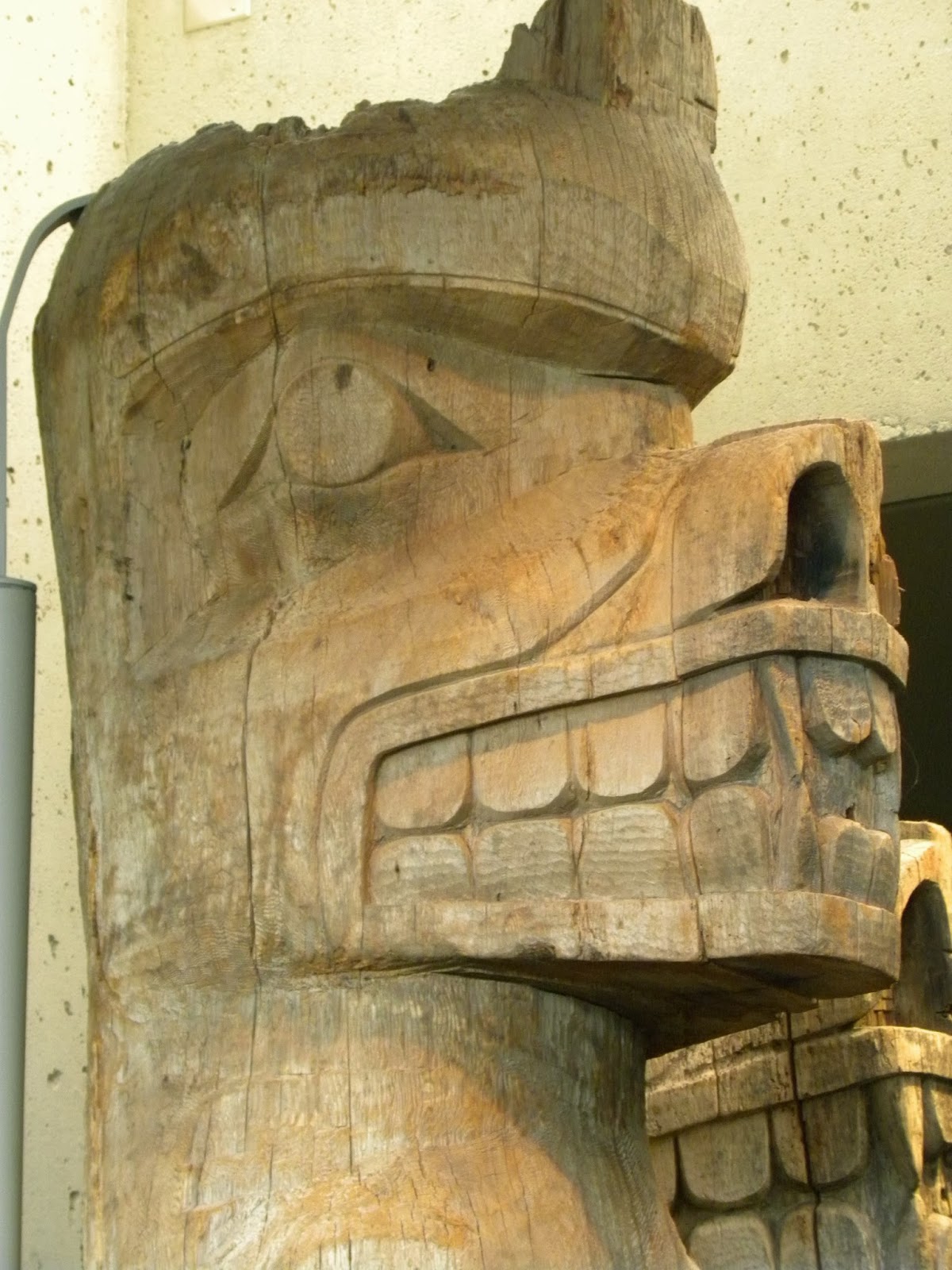
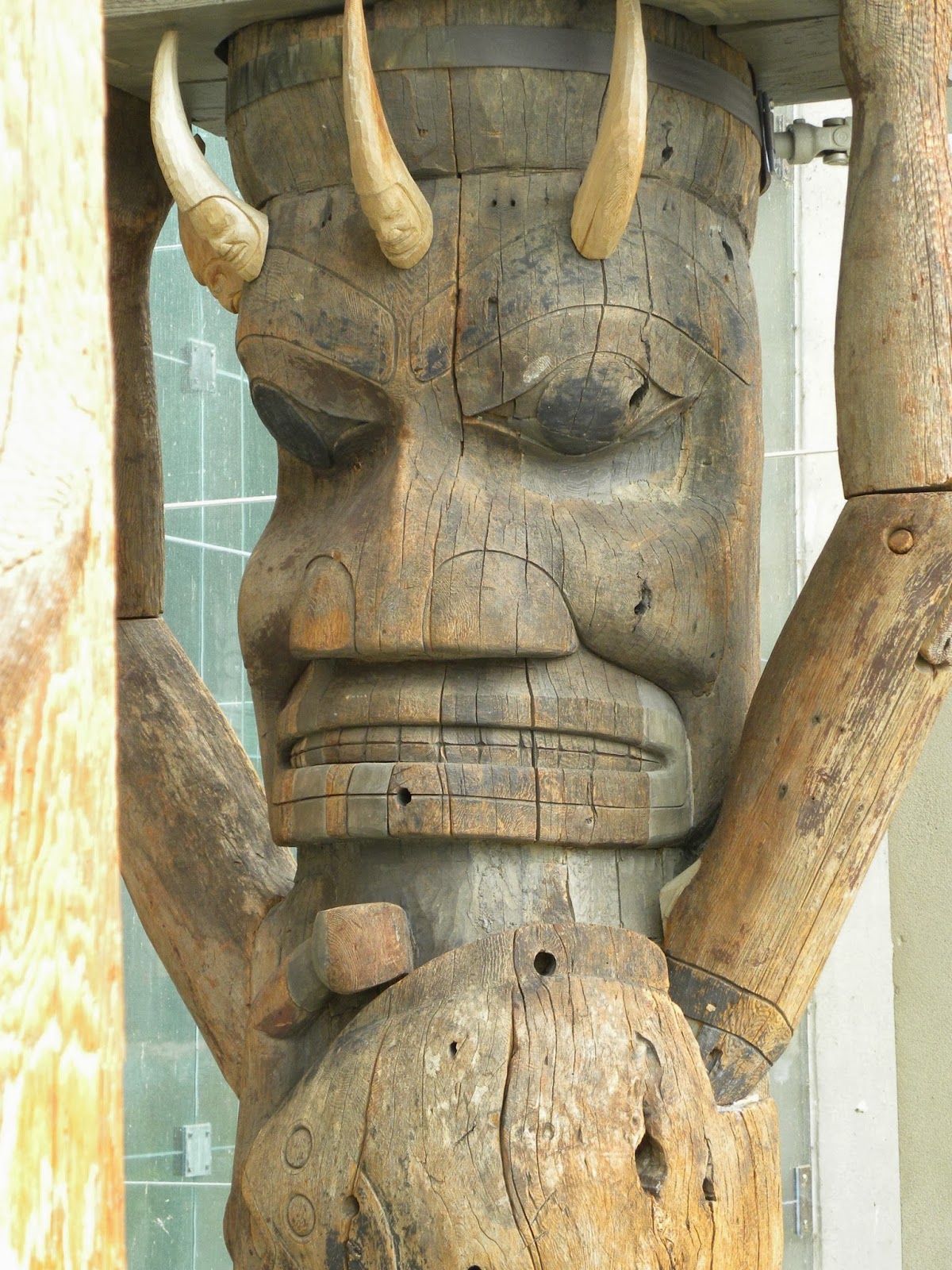
Here is the second half of a day long journey around Louise Island with the Moresby Explorers.
The most interesting stop on the trip is the ancient Haida village site of K'uuna Llnagaay (Skedans).
The site has not been inhabited since the 1880's but a few poles and remains of dwellings are still visible.
Although Louise Island is outside the boundaries of Gwaii Haanas National Park Reserve and National Marine Conservation Area Reserve, K'uuna Llnagaay is included in the Haida Heritage Site.
Haida Watchmen stay at the site throughout the summer at this dwelling:

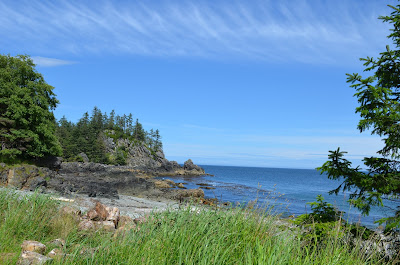
"Skedans village is located on the neck of a peninsula of land at the head of Cumshewa Inlet. A high rocky prominence at the end of the peninsula offered a perfect site for a fort to protect the village. Skedans is a European rendering of the name of the town chief, Gida'nsta. The Haida name for this town is Koona, or in the old days Huadji-lanas, which means Grizzly Bear Town."
http://www.historymuseum.ca/cmc/exhibitions/aborig/haida/hvske01e.shtml
The village was located on a peninsula with beach access from two sides, giving the inhabitants an "exit" route if attacked.
Close to the watchmen dwelling a deer grazes unafraid.


The most interesting stop on the trip is the ancient Haida village site of K'uuna Llnagaay (Skedans).
The site has not been inhabited since the 1880's but a few poles and remains of dwellings are still visible.
Although Louise Island is outside the boundaries of Gwaii Haanas National Park Reserve and National Marine Conservation Area Reserve, K'uuna Llnagaay is included in the Haida Heritage Site.
Haida Watchmen stay at the site throughout the summer at this dwelling:

"Skedans village is located on the neck of a peninsula of land at the head of Cumshewa Inlet. A high rocky prominence at the end of the peninsula offered a perfect site for a fort to protect the village. Skedans is a European rendering of the name of the town chief, Gida'nsta. The Haida name for this town is Koona, or in the old days Huadji-lanas, which means Grizzly Bear Town."
http://www.historymuseum.ca/cmc/exhibitions/aborig/haida/hvske01e.shtml
The village was located on a peninsula with beach access from two sides, giving the inhabitants an "exit" route if attacked.

Close to the watchmen dwelling a deer grazes unafraid.

Haida Poles are of three types: memorial poles, mortuary poles and house fronatal poles.
The book "Those Born at Koona", by John and Carolyn Smyly, is about the ancient village of Koona.
In the book they sketch and describe most of the original 56 poles working from the 1878 photographs of George M Dawson of the Geographic Survey of Canada.
The book "Those born at Koona" is now out of print but copies are available online through Abe Books Canada.
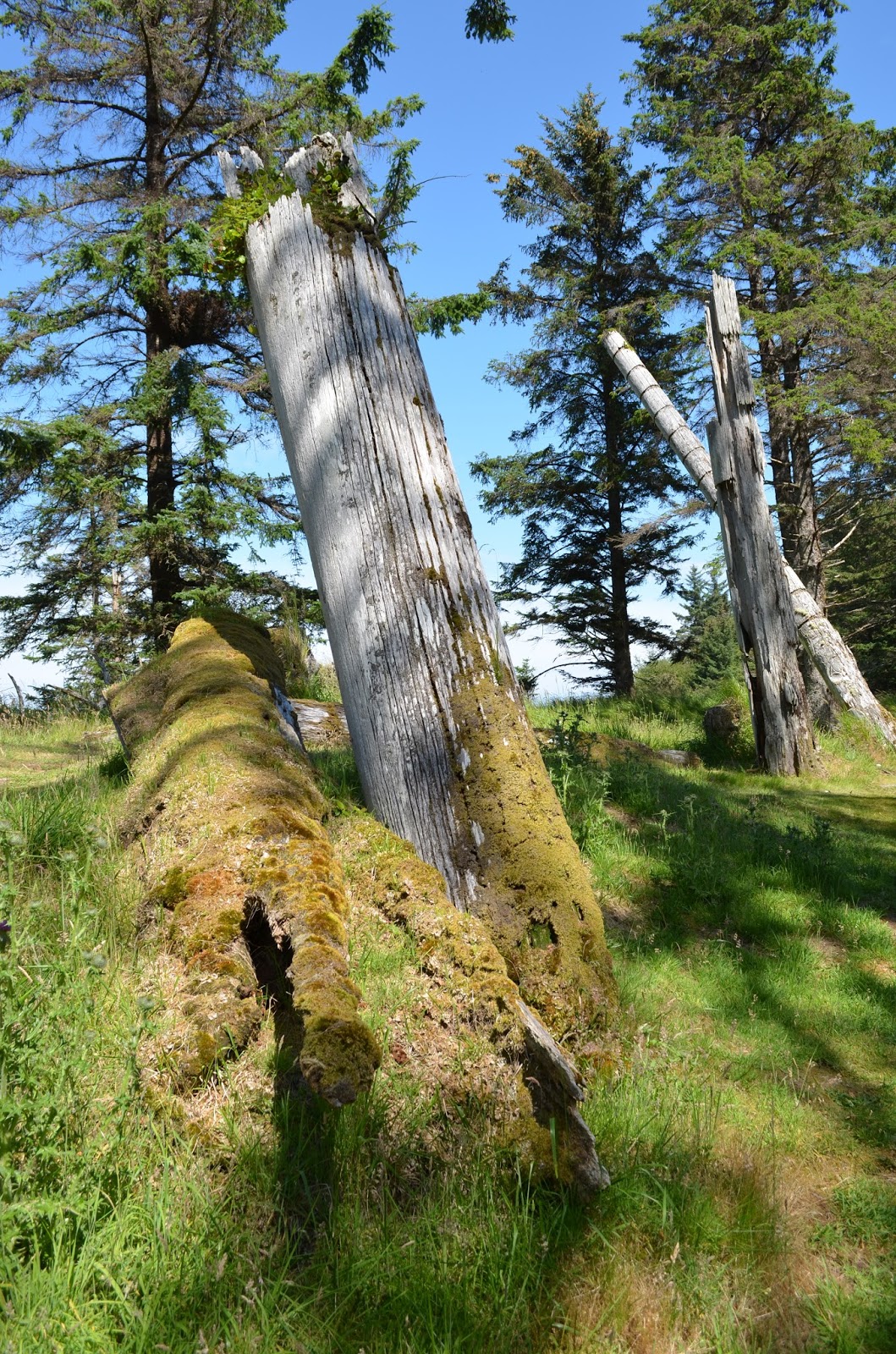

"Most totem poles stand between 3 to 18 metres tall, although some can reach over 20 metres in height.3 Different types of totem poles are erected to serve various architectural and ceremonial purposes. Most longhouses had house posts, carved with human or animal forms, to support the main beams of the building. Similarly, some longhouses featured a house frontal pole, which would be located at the main entrance and often contained an opening for passage into the house. Mortuary poles, which contained the remains of the deceased in grave boxes, served as both a tomb and a headstone. Likewise, a memorial or commemorative pole was often created to honour an important deceased person, usually by his or her successor."

Most poles were made of Western Red Cedar which is straight grained, rot resistant and relatively easy to carve.

Here is our guide Brian waiting for us to pay attention.


Not many of the original poles remain, and those that do are leaning or have fallen. The forest is gradually reclaiming them; I feel lucky to have seen them.


Emily Carr visited Skedans (as well as other ancient villages) in 1907 and took some photographs and later painted her recollections.

After our visit we got back in the zodiac for our return journey to Moresby Camp.

"Between Moresby Island and Louise Island is Carmichael Passage, with its steeply forested slopes, and Louise Narrows, a narrow passage that dries at low tide, and carries about 20 feet of water at high tide. Boaters cautiously navigate the strong current through the narrows at highwater slack."
Thank goodness we were in the capable hands of our guides.


That is all the pictures I have for today, I hope you have enjoyed todays post.
------------------------------------------
Here are some pictures of my exhibit at the North Shore Unitarian Church:

"Sticks and Stones I, II and III"

"The Village People Tryptic"

"Pecking Order"
and a link to more of the show:
------------------------------------------
Here is a painting I completed this week, it is another in the Sticks and Stones series and another varnished watercolour:

Sticks and Stones IV
Thank you for dropping by and happy Wednesday,
Gillian