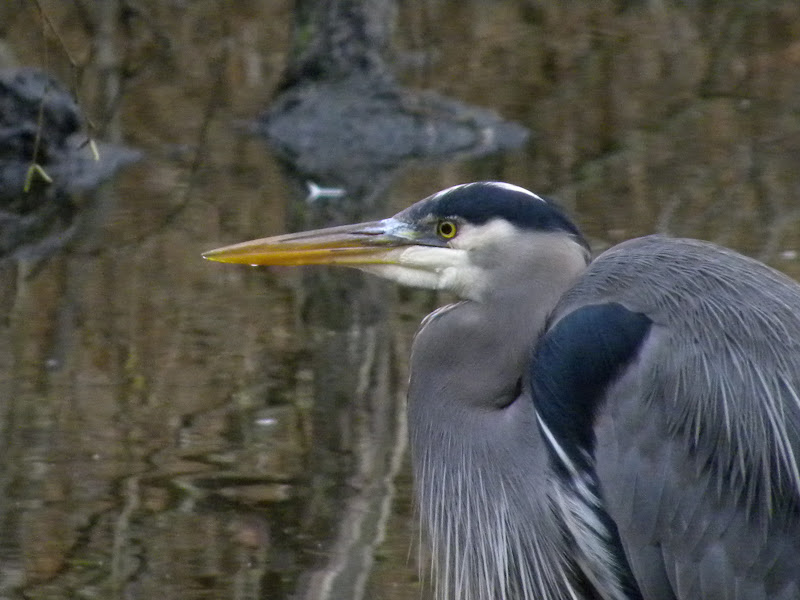
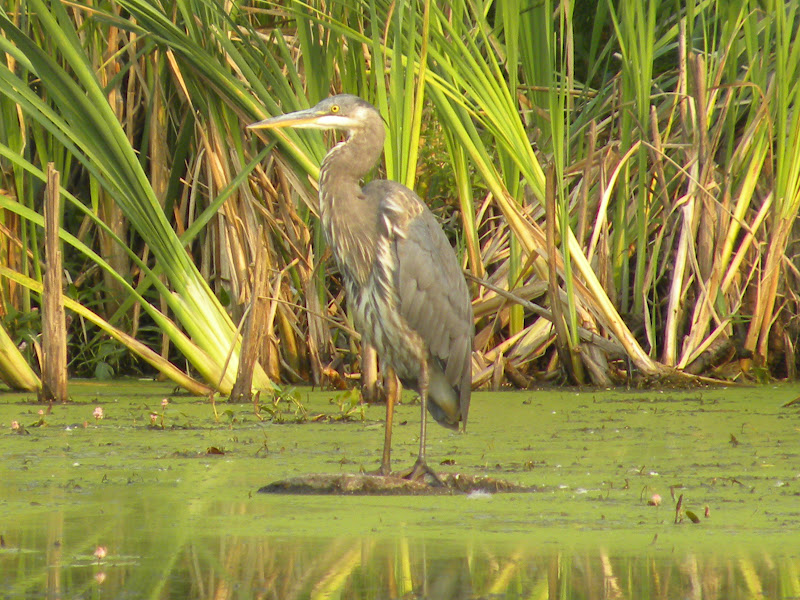
The heronry at Stanley Park is a very busy place this time of year; a heronry or a heron rookery is a nesting and breeding place for herons. The heronry in Stanley Park, on the south east corner of the park (by the Fish House and tennis courts), is the breeding place for dozens of Great Blue Herons and has been for many springs.
This heron seems to be announcing just that.

"The Stanley Park Heronry is one of the more awe inspiring sights in the Park in the Spring and Summer seasons. A cluster of around twenty trees has become the largest nesting site for Great Blue Herons in the region, a sight that draws many bird watchers, naturalists and visitors to the park to observe the dozens of pairs and their squawking young. The Herons will nest until their young are able to fly, leaving Stanley Park and returning the next year. The Heronry is a unique experience as these reclusive and elegant birds are never usually spotted in large groups."
Read more: Heronry http://www.venturevancouver.com/heronry-stanley-park-vancouver#ixzz3TvysY9iV


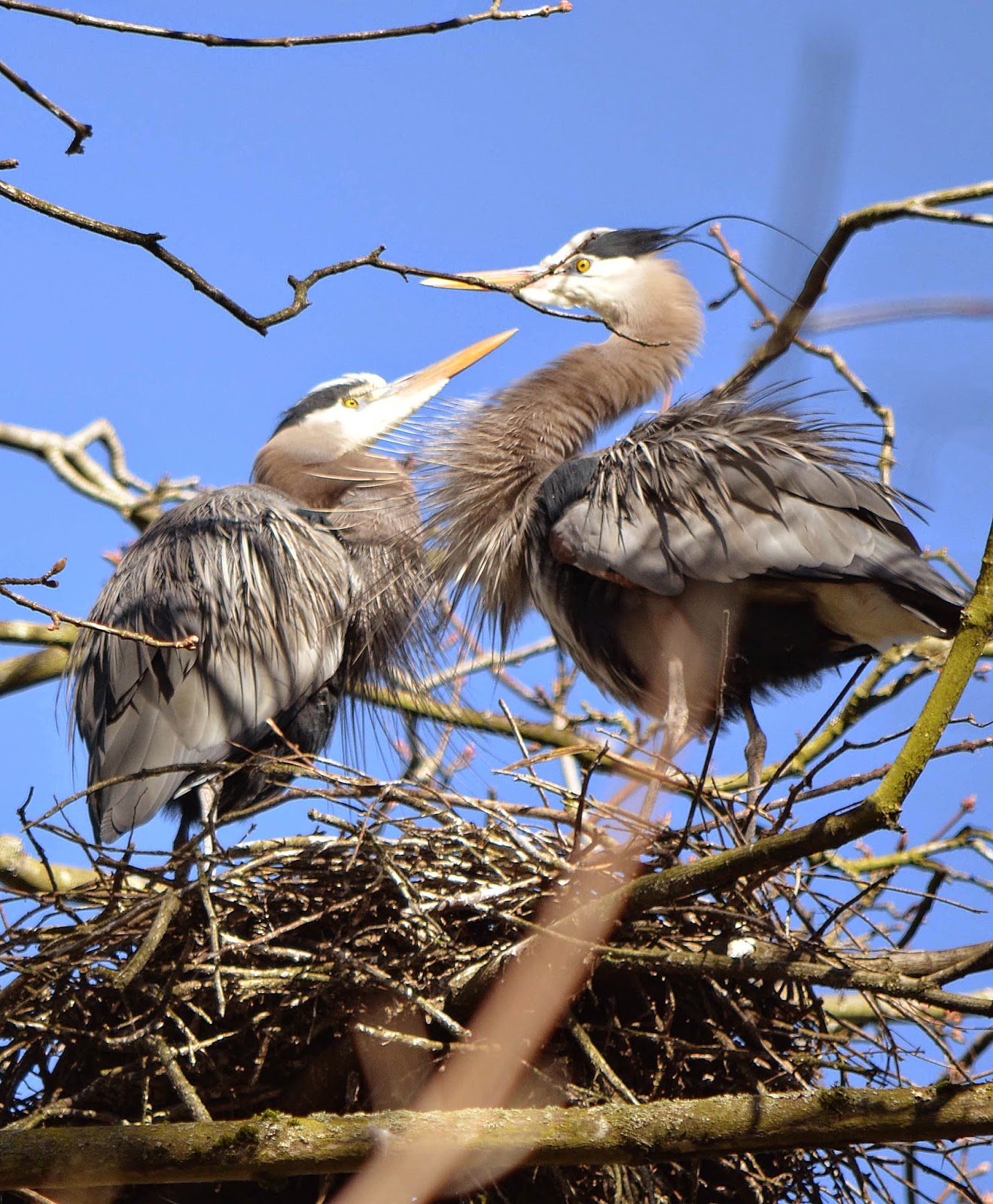


This heron seems to be announcing just that.
"The Stanley Park Heronry is one of the more awe inspiring sights in the Park in the Spring and Summer seasons. A cluster of around twenty trees has become the largest nesting site for Great Blue Herons in the region, a sight that draws many bird watchers, naturalists and visitors to the park to observe the dozens of pairs and their squawking young. The Herons will nest until their young are able to fly, leaving Stanley Park and returning the next year. The Heronry is a unique experience as these reclusive and elegant birds are never usually spotted in large groups."
Read more: Heronry http://www.venturevancouver.com/heronry-stanley-park-vancouver#ixzz3TvysY9iV
Even though it seems early to me appartently herons usually start to return to the nesting sight mid February to mid March. These pictures were taken at the end of February.
Herons do not mate for life, instead they pick a mate at the beginning of each breeding season. They don't always return to the same nest every year or even the same nesting sight.
In Stanley Park they nest in about 20 large trees and the nest remnants stay in the trees from year to year. The male will pick an existing nest or a new site for a nest then use the plume feathers around his neck to attract a mate.
The finished nests are about a metre across and about half as deep. The male gathers twigs for the nest and the female "weaves" them into a nest or adds to and repairs an existing nest.
The nests can be quite close together, I think this must cause occasional friction between neighbours.
The male below is puffing out his neck feathers to impress his mate, as I watched this was followed by clacking their becks together which is part of courtship behavior.
Then on to the serious business of getting the nest in order.
Fascinating to watch and because the trees are only just starting to bud, even from 40 feet below we still get a good view.
Magnificent in flight too.
I have been working on two ink and watercolour sketches this week.
The first is a "collage" style sketch of Cathedral Place on Georgia Street in downtown Vancouver. Cathedral Place replace the old Georgia Medical Dental Building and is decorated with copies of the "nursing sisters" from that building. The original statues were badly worn and were extremely heavy(made of terra cotta); the copies modelled from one of the repaired originals are made of fiberglass. The Nursing Sisters decorate the exterior of Cathedral Place at the third floor level, much further up the building are gargoyles with waterspouts. I combine these two decorations with a sketch of the buildings exterior in "Creature Comfort" at Cathedral Place:
The second features the Arbutus Tree, a broadleaf evergreen tree that that grows along the coast of BC and on the Gulf Islands between the lower mainland and along the inner coast of Vancouver Island. They grow in dry rocky sunny areas. The arbutus stump below shows the strawberry tan coloured bark typical of the tree and is an example of the odd shapes that one sometimes sees along the gulf island shores. I call this painting "Arbutus Steer":
Thank you for all your kind comments on my last post.
Thanks for stopping by,
happy Whimsy Wednesday,
Until next week,
Gillian.