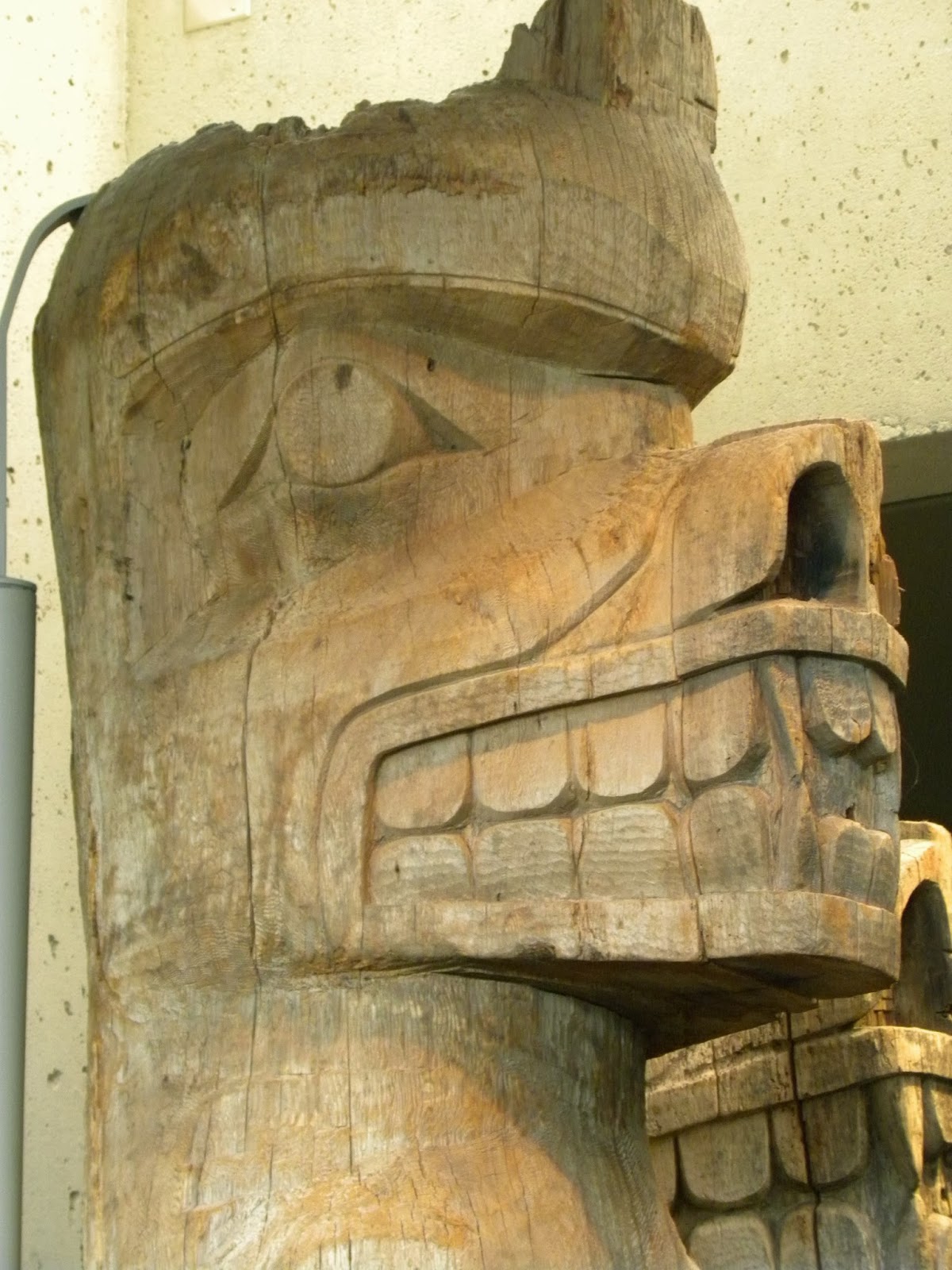
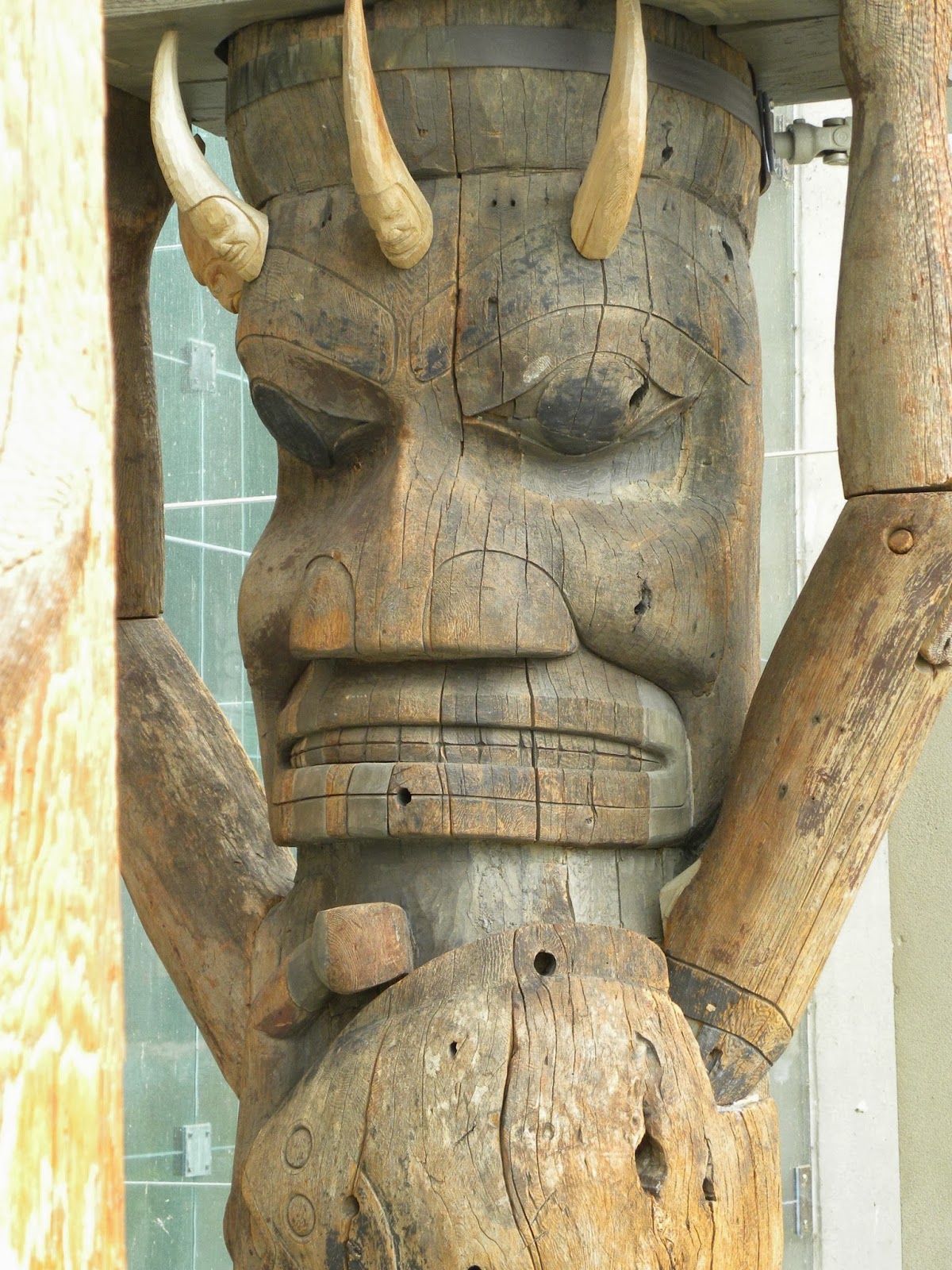
What's new at the MOA - quite a lot!
If you haven't been to the Museum of Anthropology recently, now is a good time.
One of the featured exhibits is by Lawrence Paul Yuxweluptun: (continues until mid October 2016)
Lawrence Paul Yuxweluptun: Unceded Territories
"Vancouver artist Lawrence Paul Yuxweluptun, of Coast Salish and Okanagan descent, is showcased in this provocative exhibition of works that confront the colonialist suppression of First Nations peoples and the ongoing struggle for Indigenous rights to lands, resources, and sovereignty.
Twenty years since his last major Canadian solo show, Unceded Territories will demonstrate the progression of Yuxweluptun’s artistry and ideas through hard-hitting, polemical, but also playful artworks that span his remarkable 30- year career, featuring a selection of brand-new works exhibited publicly for the first time." http://moa.ubc.ca/portfolio_page/lawrence-paul/
This is an interesting and thought provoking exhibition. Here are a few pictures I took when I visited the exhibition recently:


Lawrence Paul Yuxweluptun, graduated from the Emily Carr School of Art and Design in 1983 with an honours degree in painting. Yuxweluptun's strategy is to document and promote change in contemporary Indigenous history in large-scale paintings (from 54.2 x 34.7cm to 233.7 x 200.7cm), using Coast Salish cosmology, Northwest Coast formal design elements, and the Western landscape tradition. His painted works explore political, environmental, and cultural issues. His personal and socio-political experiences enhance this practice of documentation. Yuxweluptun's work has been included in numerous international group and solo exhibitions, such as INDIGENA: Contemporary Native Perspectives in 1992. He was the recipient of the Vancouver Institute for the Visual Arts (VIVA) award in 1998. http://lawrencepaulyuxweluptun.com/


Here is a video titled "Lawrence Paul Yuxweluptun: Unceded Territories"


If you haven't been to the Museum of Anthropology recently, now is a good time.
One of the featured exhibits is by Lawrence Paul Yuxweluptun: (continues until mid October 2016)
Lawrence Paul Yuxweluptun: Unceded Territories
"Vancouver artist Lawrence Paul Yuxweluptun, of Coast Salish and Okanagan descent, is showcased in this provocative exhibition of works that confront the colonialist suppression of First Nations peoples and the ongoing struggle for Indigenous rights to lands, resources, and sovereignty.
Twenty years since his last major Canadian solo show, Unceded Territories will demonstrate the progression of Yuxweluptun’s artistry and ideas through hard-hitting, polemical, but also playful artworks that span his remarkable 30- year career, featuring a selection of brand-new works exhibited publicly for the first time." http://moa.ubc.ca/portfolio_page/lawrence-paul/
This is an interesting and thought provoking exhibition. Here are a few pictures I took when I visited the exhibition recently:
This is a painting about fish farmers, if you look carefully you can see the lice.

The shows opening attracted a record crowd:

"Red Man watching White Man trying to fix a hole in the sky"

detail of above

Lawrence Paul Yuxweluptun, graduated from the Emily Carr School of Art and Design in 1983 with an honours degree in painting. Yuxweluptun's strategy is to document and promote change in contemporary Indigenous history in large-scale paintings (from 54.2 x 34.7cm to 233.7 x 200.7cm), using Coast Salish cosmology, Northwest Coast formal design elements, and the Western landscape tradition. His painted works explore political, environmental, and cultural issues. His personal and socio-political experiences enhance this practice of documentation. Yuxweluptun's work has been included in numerous international group and solo exhibitions, such as INDIGENA: Contemporary Native Perspectives in 1992. He was the recipient of the Vancouver Institute for the Visual Arts (VIVA) award in 1998. http://lawrencepaulyuxweluptun.com/


Here is a video titled "Lawrence Paul Yuxweluptun: Unceded Territories"
The museum has been renovated since the last time I visited, with changes to the indoor and outdoor displays. Definitely worth a visit!
------------------------------------------------
On a different level entirely here is my art news:
I am very please to report that my painting "Venetian White" has been accepted into the juried show "Arts 2016" and I will be getting an award.

The opening reception is Friday June 24, 7 to 9 pm.
The exhibition is at the Surrey Art Gallery (13750 88th Avenue) and runs until August 27, 2016.
----------------------------------------------
Here is my latest painting, another varnished watercolour (8" x 8") named
"Small Change":

Well that's all for this week,
happy Wednesday, with whimsy,
Gillian.